
When an ambulance arrives at an emergency scene, people need to recognize it quickly. This is one reason white ambulances remain common in emergency medical services worldwide.
But what does a white ambulance mean? What is it used for? And how do different ambulance colors compare? The answer can vary by country and local regulations. In many markets, white creates a clean and professional medical image. It also provides a clear background for medical symbols, reflective markings, emergency graphics, and logos.
But is white always the best choice for your fleet? The answer depends on more than just aesthetics. This article explores the meaning, uses, and practical advantages of white ambulances, while comparing different ambulance colors and the factors buyers should consider before making a choice.
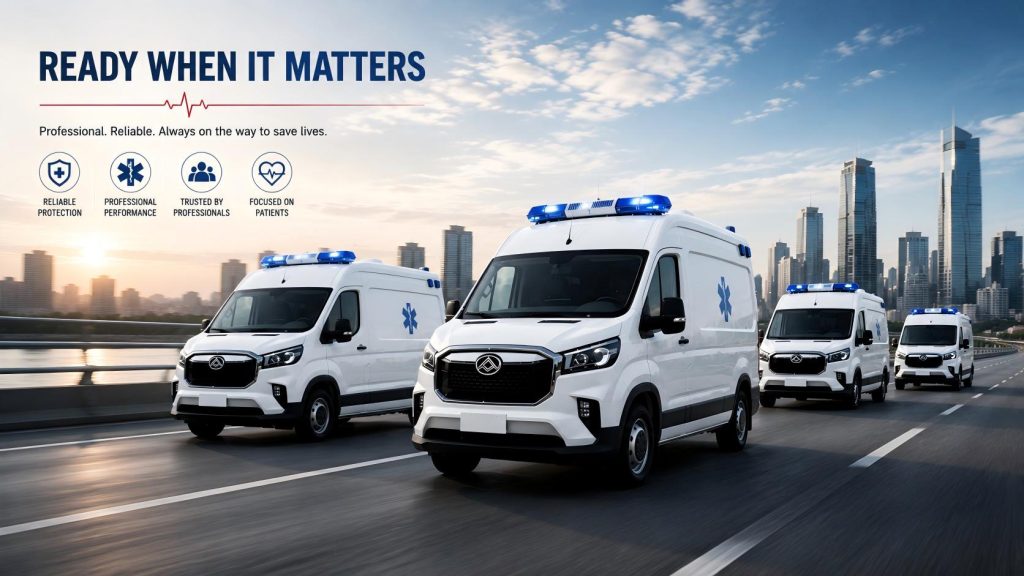
Table of Contents
Common Features of a White Ambulance
A white ambulance is a medical vehicle with a predominantly white exterior. Its actual function depends on the vehicle platform, interior layout, medical equipment, and local regulations.
The exterior also works as a visual identification system. A white body creates a clean background that helps reflective strips, emergency markings, and warning graphics stand out.
A typical white ambulance may include:
- Emergency warning lights
- Medical identification markings
- Reflective graphics
- Medical symbols
- Ambulance lettering
- Hospital or company logos
- Rear and side identification markings
The final design can vary based on the buyer’s needs and local requirements.
Key Applications Across Healthcare Sectors
A white ambulance can support different medical and emergency service operations. Its exact role depends on the vehicle configuration, operator, and intended use.
| Application | Typical Use | Main Purpose |
|---|---|---|
| Hospital Medical Services | Medical response and transportation between healthcare facilities | Supports hospital and patient transport operations |
| Private Medical Services | Medical transport and emergency services | Provides flexible solutions for private healthcare providers |
| Community Healthcare Services | Local medical response and community healthcare programs | Helps medical teams reach patients outside major facilities |
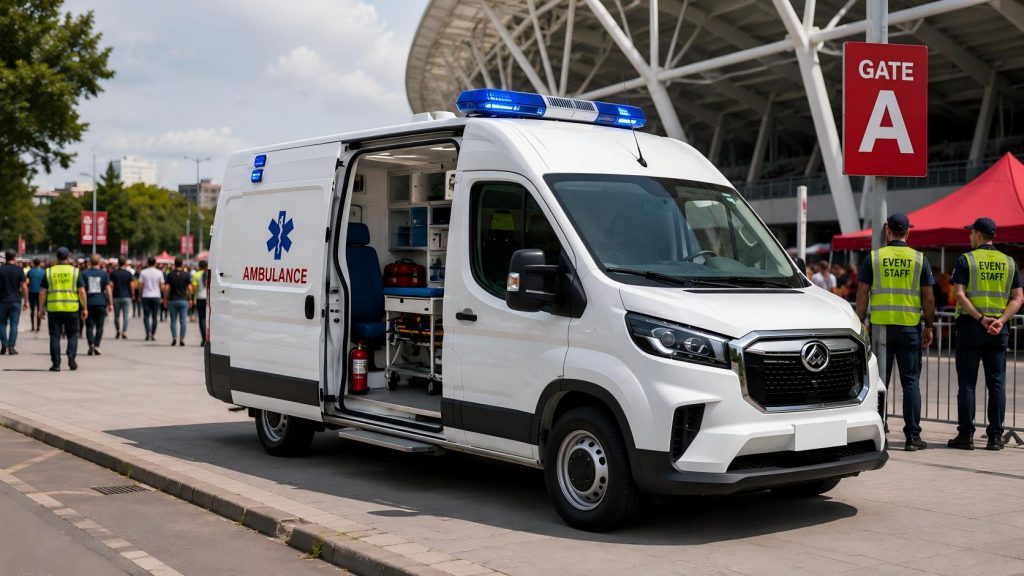
| Event Medical Support | Medical support at sporting events, concerts, and public gatherings | Provides on-site emergency assistance |
| Fleet Operations | Multiple ambulances with different configurations | Maintains a consistent fleet appearance |
Ambulance Color Comparison
Ambulance colors do not have one universal meaning.
Different countries and organizations can follow different color systems. Local regulations often determine the required body color, emergency markings, reflective materials, and warning graphics.
| Ambulance Color | Common Association | Important Note |
|---|---|---|
| White | General medical and emergency services | Common in many markets |
| Yellow | High visibility and emergency response | Often works with reflective markings |
| Red | Emergency identification or organization branding | Meaning varies by region |
| Green | Medical or specialized services in some markets | Not a universal standard |
| Blue | Emergency services or specific organizations in some markets | Local rules apply |
For example, ambulance designs in the UK commonly use high-visibility yellow alongside other markings, while the U.S. has no single national ambulance color standard and local EMS systems can follow different requirements.
Yellow can offer strong daytime visibility, while white provides a clean base for reflective markings and generally absorbs less solar heat than darker colors. The best choice still depends on local regulations and operating conditions.
Buyers should check local regulations before choosing the final exterior design.
4 Practical Advantages Beyond the Color
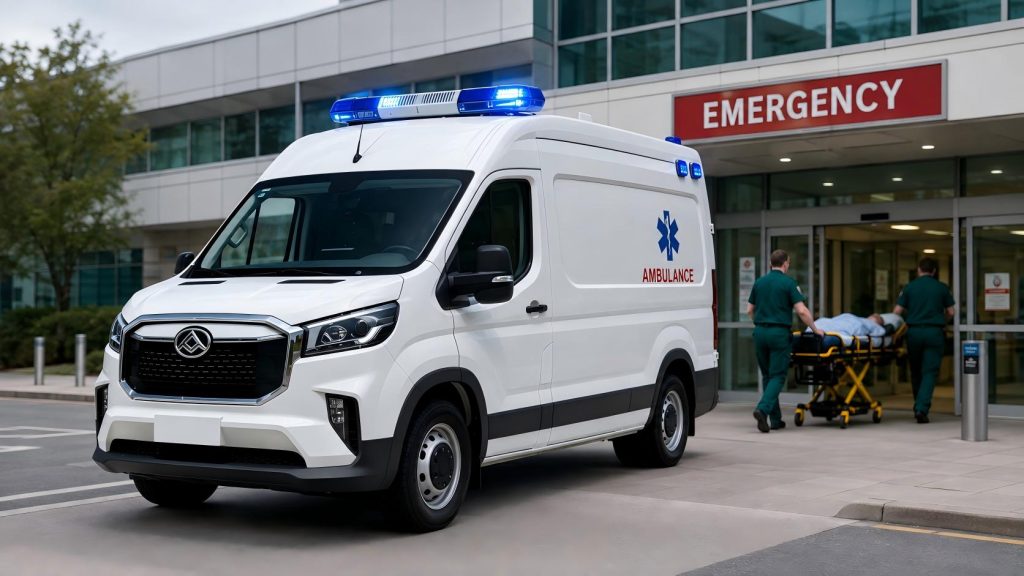
White remains a practical choice for many ambulance operators.
1. Professional Medical Appearance
White fits naturally with the visual identity of hospitals and healthcare organizations.
It creates a clean and professional appearance across different types of medical fleets.
2. Easy Exterior Inspection
White can make dirt, stains, scratches, and paint damage easier to notice.
This can help fleet teams identify areas that need cleaning or exterior maintenance.
3. Temperature Control
White surfaces generally absorb less solar heat than darker colors.
This can help reduce heat buildup on the vehicle exterior in hot and sunny environments.
However, body color alone cannot control the temperature inside the medical compartment. Air conditioning, insulation, ventilation, and interior design also play important roles.
4. Flexible Fleet Design
White provides a practical base for different ambulance configurations.
Organizations can use different vehicle models while maintaining a consistent fleet appearance.
Critical Checklist Before Placing Your Order
The exterior color should not be the only factor in your purchasing decision.
Before ordering a white ambulance, consider these five factors.
1. Check Local Regulations
First, confirm the requirements for:
- Ambulance colors
- Emergency markings
- Reflective materials
- Warning lights
- Vehicle registration
- Required certifications
Local requirements can vary by country and region. Confirm them before finalizing the vehicle design.
2. Consider the Vehicle Size
Choose a vehicle that matches your roads and operating environment.
Consider the vehicle dimensions, passenger capacity, road conditions, and available parking or service space.
3. Review the Medical Compartment
Pay attention to:
- Stretcher position
- Medical cabinets
- Storage space
- Seating
- Work areas
- Interior lighting
- Power outlets
A practical medical compartment layout can help medical staff work efficiently. Explore Ambulance Medical Interior Options
4. Check the Electrical System
Review the available power outlets, inverter capacity, battery system, lighting, and other electrical requirements before production.
The electrical system should match the equipment you plan to use inside the ambulance.
5. Plan Exterior Customization
You may need:
- Hospital branding
- Company logos
- Ambulance lettering
- Medical symbols
- Reflective strips
- Country-specific markings
A white exterior gives you a flexible base for customization. Explore Customized Medical Vehicle Solutions
What’s Next?
White ambulances remain popular because they combine a familiar medical appearance with flexible exterior design.
The white body provides a clear base for medical symbols, reflective markings, emergency graphics, and branding. It can also support a consistent fleet appearance across different vehicles and markets.
Still, color represents only one part of an ambulance. Buyers should also consider the vehicle platform, medical compartment, electrical system, equipment, local regulations, and customization needs.
Looking for a white ambulance for your hospital, medical service, or fleet?
Contact us to find the right white ambulance configuration for your market. We’re ready to discuss your vehicle specs, customization needs, and regulatory requirements. requirements.
FAQ about White Ambulances
What Does a White Ambulance Mean?
A white ambulance usually presents a professional medical image. It can help people recognize the vehicle as part of a healthcare or emergency service. However, the exact meaning of white can vary between countries.
Do white ambulances follow the same standards worldwide?
No. Color, markings, and equipment requirements can vary by country.
Can a white ambulance carry custom branding?
Yes. Buyers can add logos, lettering, reflective graphics, and medical symbols based on their needs.
Does ambulance color affect road visibility?
Color can help with visual recognition, but reflective markings and warning lights also play an important role.
Can I choose a different exterior color?
In many cases, yes. The available options depend on the vehicle manufacturer and local requirements.