
An ambulance is more than a vehicle for patient transportation. It is a mobile medical platform that supports emergency response, patient care, and medical rescue operations a complete guide to different types of ambulances
However, choosing the right ambulance vehicle is not always simple. Different regions, healthcare systems, and operating environments require different ambulance configurations.
A city emergency service may need a fast-response emergency ambulance, while a remote medical organization may require a 4×4 off-road ambulance capable of operating on rough terrain. Hospitals may also need specialized vehicles such as ICU ambulances or patient transport ambulances for different medical missions.
The classification of ambulances varies between countries. For example, North America commonly uses Type I, Type II, and Type III ambulance classifications, while Europe follows the EN 1789 standard with Type A, Type B, and Type C categories. In many developing markets, buyers also distinguish ambulances according to medical capability, such as BLS (Basic Life Support) and ALS (Advanced Life Support).
This guide explains the different types of ambulances, their features, benefits, applications, and key factors to consider when purchasing an ambulance vehicle.

Table of Contents
What Is an Ambulance Vehicle?
An ambulance vehicle is a specially equipped vehicle designed to provide medical assistance and transport patients safely from one location to another.
Unlike standard vehicles, ambulances include dedicated medical spaces and systems that allow healthcare professionals to monitor and treat patients during transportation.
A modern ambulance may include:
- Patient stretcher system
- Medical storage cabinets
- Oxygen supply system
- Emergency lighting system
- Communication equipment
- Patient monitoring devices
- Medical power supply system
Depending on the application, ambulance vehicles can be built on different platforms, including:
- Van chassis
- Truck chassis
- 4×4 off-road chassis
- Electric vehicle platforms
The correct configuration depends on factors such as medical requirements, road conditions, patient volume, and local regulations.
Global Ambulance Classification Standards
Before selecting an ambulance, buyers should understand that different countries classify ambulances in different ways.
North American Ambulance Classification: Type I, Type II, and Type III
In North America, ambulances are commonly divided according to their chassis design.
Type I Ambulance
A Type I ambulance is built on a truck-style chassis with a separate modular patient compartment.
Features:
- Heavy-duty truck frame
- Large medical compartment
- Strong payload capacity
- Suitable for advanced medical equipment
Benefits:
- Excellent durability
- More interior space
- Suitable for long-term emergency service operations
Typical Applications:
- Emergency medical services
- Fire departments
- Rural emergency response
Type I ambulances are often selected when operators need a robust vehicle with a large medical workspace.
Type II Ambulance
A Type II ambulance is usually based on a van chassis.
Features:
- Compact exterior dimensions
- Good urban mobility
- Lower operating cost
Benefits:
- Easy city driving
- Better fuel economy
- Lower maintenance cost
Typical Applications:
- Urban emergency services
- Hospital transportation
- Patient transfer
Type II ambulances are popular in cities where road space and operating efficiency are important.
Type III Ambulance
A Type III ambulance combines a van cab with a larger modular patient compartment.
Features:
- Van-based driving cabin
- Extended medical compartment
- Improved working space
Benefits:
- Better balance between mobility and medical capacity
- More comfortable for medical staff
- Suitable for emergency response
Typical Applications:
- Hospitals
- Emergency medical organizations
- Public rescue services
European EN 1789 Ambulance Classification
European countries often refer to the EN 1789 ambulance standard, which classifies vehicles according to their medical purpose.
Type A Ambulance
Type A ambulances are designed for patient transportation.
They are mainly used for patients who do not require intensive medical treatment during transportation.
Applications:
- Hospital transfers
- Routine medical transportation
- Non-emergency patient movement
Type B Ambulance
Type B ambulances are designed for emergency medical transportation.
They provide equipment for basic emergency treatment and patient stabilization.
Applications:
- Emergency response
- Accident rescue
- Pre-hospital medical care
Type C Ambulance
Type C ambulances are designed for intensive care transportation.
They function as mobile intensive care units.
Applications:
- Critical patient transfer
- ICU transportation
- Advanced life-support missions
Another important classification method is based on medical capability.
BLS Ambulance vs ALS Ambulance
BLS Ambulance (Basic Life Support)

Typical equipment includes:
BLS ambulances provide basic emergency medical support.
- Oxygen system
- Basic monitoring equipment
- First aid equipment
- Emergency medication storage
They are suitable for:
- General emergency response
- Patient transportation
- Community medical services
ALS Ambulance (Advanced Life Support)
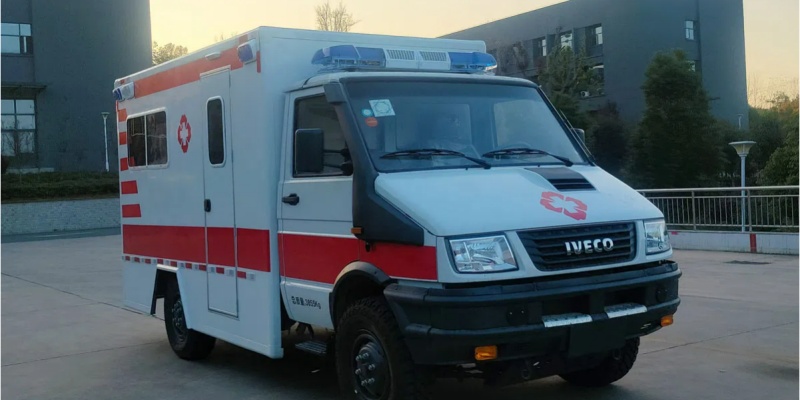
ALS ambulances provide a higher level of medical care.
They may include:
- Advanced patient monitors
- Defibrillators
- Ventilators
- Infusion pumps
- Advanced emergency equipment
ALS ambulances are commonly used for:
- Critical emergencies
- Intensive care transfer
- Advanced rescue operations
Different Types of Ambulances Based on Applications
While international standards classify ambulances by structure and medical capability, buyers often select vehicles based on actual operational requirements.
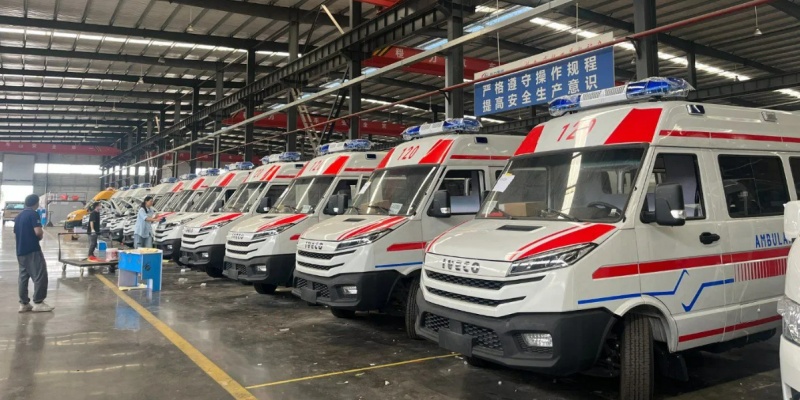
1. Emergency Ambulance
An emergency ambulance is designed for rapid medical response.
It is commonly used for:
- Traffic accidents
- Sudden illness
- Public emergencies
- Disaster rescue
Features
Emergency ambulances usually include:
- Patient stretcher
- Emergency lighting
- Oxygen system
- Medical cabinets
- Communication equipment
Advanced models may also include ALS-level medical equipment.
Benefits
Fast Response Capability
Emergency ambulances allow medical teams to reach patients quickly.
Early Medical Treatment
Patients can receive immediate care before arriving at a hospital.
Suitable Buyers
Emergency ambulances are commonly purchased by:
- Hospitals
- Government rescue organizations
- Emergency medical service providers
2. Patient Transport Ambulance
A patient transport ambulance focuses on safe and comfortable patient movement rather than emergency treatment.
Features
Typical configurations include:
- Stretcher system
- Wheelchair access
- Basic medical equipment
- Passenger seating
Benefits
Lower Operating Cost
Compared with advanced emergency ambulances, patient transport ambulances require fewer medical systems.
Efficient Daily Operation
They are ideal for regular transportation tasks.
Applications
- Hospital transfers
- Elderly care transportation
- Rehabilitation centers
- Medical transportation companies
Suitable Buyers
Organizations that mainly perform scheduled patient transfers often choose this type of ambulance.
3. ICU Ambulance
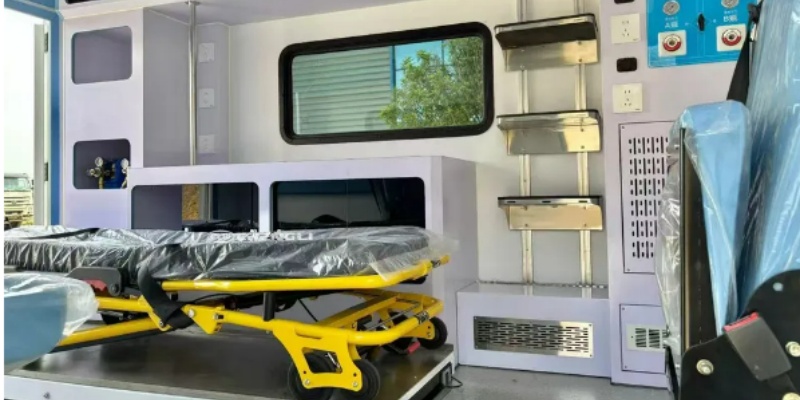
An ICU ambulance is a specialized ambulance vehicle designed for patients requiring continuous medical monitoring.
Features
Typical ICU ambulance equipment includes:
- Ventilator
- Patient monitor
- Infusion pump
- Defibrillator
- Advanced oxygen system
Benefits
Hospital-Level Medical Support
ICU ambulances allow medical professionals to provide intensive care during transportation.
Safe Critical Patient Transfer
They are suitable for moving unstable patients between hospitals.
Applications
- ICU transfers
- Emergency medical centers
- Large hospitals
Suitable Buyers
ICU ambulances are mainly selected by hospitals and professional emergency medical organizations.
4. Off-Road Ambulance

An off-road ambulance is a specialized ambulance vehicle designed for areas where standard road ambulances cannot operate effectively.
In many developing regions, rural communities, mining areas, mountainous locations, and disaster zones, poor road conditions can prevent conventional ambulances from reaching patients. In these situations, an off-road ambulance provides a reliable medical transportation solution.
Features of Off-Road Ambulances
4×4 Drive System
Most off-road ambulances use a four-wheel-drive chassis to improve traction on:
- Mud roads
- Sand
- Snow
- Rocky terrain
- Unpaved roads
High Ground Clearance
Compared with standard ambulance vehicles, off-road models usually have increased ground clearance to overcome obstacles and uneven surfaces.
Reinforced Suspension System
A heavy-duty suspension system improves:
- Vehicle stability
- Driving comfort
- Durability under harsh conditions
Customized Medical Compartment
The rear medical cabin can be equipped according to different missions, including:
- Patient stretcher
- Oxygen system
- Emergency medical equipment
- Storage cabinets
- Rescue tools

Benefits of Off-Road Ambulances
Access to Remote Areas
The biggest advantage of an off-road ambulance is its ability to reach locations where normal ambulances may fail.
This makes it suitable for:
- Remote villages
- Mountain regions
- Desert areas
- Mining sites
Reliable Emergency Response
During natural disasters or extreme weather conditions, off-road ambulances can continue operating when road conditions become challenging.
Flexible Application
They can be used for:
- Rural healthcare
- Disaster rescue
- Military medical support
- Exploration projects
Typical Applications
Off-road ambulances are widely used in:
- African rural healthcare projects
- Mining operations
- Oil and gas fields
- Mountain rescue
- Humanitarian missions
For regions with complex terrain, choosing the correct off-road ambulance chassis is one of the most important purchasing decisions.
5. Mobile Clinic Ambulance
A mobile clinic ambulance is different from a traditional ambulance because its main purpose is not only patient transportation but also providing medical services in locations without permanent healthcare facilities.
It works as a small mobile hospital that can bring healthcare resources directly to communities.
Features of Mobile Clinic Ambulances
Medical Examination Area
The interior can be customized with:
- Examination table
- Medical cabinets
- Diagnostic equipment
- Working desk
- Patient seating
Flexible Interior Layout
Manufacturers can design the medical cabin according to specific healthcare programs, such as:
- Dental examination
- Vaccination services
- Health screening
- Disease prevention programs
Independent Power System
Many mobile clinics include:
- Auxiliary batteries
- Inverter systems
- External power connections
to support medical equipment.
Benefits of Mobile Clinic Ambulances
Improved Healthcare Accessibility
Mobile clinics help provide medical services in:
- Rural communities
- Remote regions
- Developing areas
Support Public Health Programs
They are commonly used for:
- Vaccination campaigns
- Health examinations
- Community medical projects
Cost-Effective Healthcare Solution
Compared with building permanent medical facilities, mobile clinics provide a flexible solution with lower infrastructure investment.
Typical Applications
- Government healthcare programs
- Rural medical services
- Corporate medical projects
- Community healthcare organizations
6. Special Types of Ambulances
Besides common ambulance categories, some specialized ambulance vehicles are developed for specific medical missions.
Neonatal Ambulance
A neonatal ambulance is designed for transporting newborn babies who require specialized medical care.
Features
Typical equipment includes:
- Neonatal incubator
- Infant monitoring system
- Oxygen supply
- Temperature control system
Benefits
It provides a controlled environment for premature babies and newborn patients during transportation.
Applications
- Newborn transfer between hospitals
- Neonatal intensive care transportation
Negative Pressure Ambulance
A negative pressure ambulance is designed for infectious disease transportation.
It uses an air circulation system that maintains lower air pressure inside the medical compartment.
Features
- Air filtration system
- Isolation medical cabin
- Controlled ventilation
Benefits
It helps reduce the risk of infection transmission during patient transportation.
Applications
- Infectious disease response
- Public health emergencies
- Epidemic control
Electric Ambulance
With the development of new energy vehicles, electric ambulances are becoming increasingly popular in urban areas.
Features
- Electric power system
- Low noise operation
- Zero tailpipe emissions
Benefits
Environmentally Friendly
Electric ambulances help reduce urban emissions.
Lower Operating Costs
They can reduce:
- Fuel expenses
- Engine maintenance costs
Quiet Operation
Lower noise levels are beneficial during emergency medical operations.
Considerations
Before selecting an electric ambulance, buyers should evaluate:
- Charging infrastructure
- Driving range
- Operating routes
- Local electricity availability
Electric ambulances are especially suitable for:
- Smart cities
- Urban hospitals
- Fixed-route medical transportation
Air Ambulance
An air ambulance refers to aircraft-based medical transportation used for long-distance or emergency medical evacuation.
Although different from road ambulance vehicles, air ambulances are an important part of modern emergency medical systems.
Applications
- Long-distance patient transfer
- Remote rescue missions
- International medical evacuation
Comparison of Different Types of Ambulances
| Ambulance Type | Medical Capability | Main Feature | Best Application |
| Emergency Ambulance | BLS/ALS | Fast response and emergency equipment | Urban emergency rescue |
| Patient Transport Ambulance | Basic medical support | Comfortable transportation | Hospital transfer |
| ICU Ambulance | Advanced life support | Intensive care equipment | Critical patient transfer |
| Off-Road Ambulance | BLS/ALS customization | 4×4 capability | Remote and harsh environments |
| Mobile Clinic Ambulance | Medical service platform | Healthcare workspace | Rural medical programs |
| Negative Pressure Ambulance | Isolation support | Infection control system | Disease prevention |
How to Choose the Right Ambulance Vehicle?
Selecting the correct ambulance requires evaluating medical requirements, operating conditions, and local regulations.

1. Define the Medical Purpose
First determine the main application:
- Emergency response
- Patient transportation
- ICU transfer
- Rural medical service
- Disaster rescue
Different missions require different ambulance configurations.
2. Consider Operating Environment
Evaluate:
- Road conditions
- Climate
- Distance of operation
- Terrain
For cities, van-based ambulances are usually suitable.
For remote areas, an off-road ambulance with a 4×4 chassis may be necessary.
3. Select the Right Medical Equipment Level
Consider whether you need:
- BLS equipment
- ALS equipment
- ICU configuration
- Specialized systems
Avoid over-equipping vehicles that do not match actual operational needs.
4. Check Certification Requirements
Before purchasing, confirm local requirements, including:
- Vehicle certification
- Medical equipment standards
- Emission regulations
- Safety requirements
Common international references include:
- EN 1789
- KKK-A-1822
- Local ambulance regulations
5. Evaluate Manufacturer Support
A reliable ambulance supplier should provide:
- Technical support
- Spare parts supply
- Customization service
- After-sales assistance
Medical vehicles require long-term operational reliability, so manufacturer capability is an important factor.
Common Mistakes When Buying an Ambulance
Purchasing an ambulance vehicle requires more than selecting a suitable chassis and medical equipment. Many buyers focus only on the initial purchase price but overlook important factors that affect long-term operation, maintenance, and reliability.
Understanding common purchasing mistakes can help organizations choose a more suitable ambulance solution.
1. Choosing an Ambulance Based Only on Price
The lowest purchase price does not always mean the best value.
A low-cost ambulance may result in:
- Lower-quality interior materials
- Poor electrical system design
- Limited medical equipment options
- Higher maintenance costs
- Shorter service life
A professional ambulance should balance:
- Vehicle reliability
- Medical functionality
- Safety standards
- Operating cost
The total ownership cost is usually more important than the initial investment.
2. Selecting the Wrong Ambulance Type
Different medical missions require different vehicle configurations.
For example:
- A patient transport ambulance may not have enough equipment for critical emergencies.
- A standard urban ambulance may not perform well in remote areas.
- An ICU ambulance may be unnecessary for simple transportation tasks.
Before purchasing, buyers should clearly define:
- Patient type
- Medical requirements
- Operating environment
- Daily workload
3. Ignoring Chassis Performance
The chassis directly affects ambulance reliability.
Important factors include:
- Engine performance
- Fuel consumption
- Suspension system
- Payload capacity
- Driving conditions
For urban applications, a compact van chassis may provide better efficiency.
For remote areas, an off-road ambulance chassis with 4×4 capability may be a better solution.
4. Overlooking Medical Cabin Design
The rear medical compartment is the working area for healthcare professionals.
A poorly designed cabin can affect:
- Emergency treatment efficiency
- Equipment accessibility
- Medical staff safety
Important design considerations include:
- Stretcher positioning
- Cabinet layout
- Equipment mounting
- Lighting system
- Working space
A well-designed medical cabin improves both safety and operational efficiency.
5. Ignoring After-Sales Support
Ambulances are specialized vehicles that require reliable technical support.
Before purchasing, buyers should evaluate whether the manufacturer provides:
- Spare parts availability
- Technical assistance
- Warranty service
- Maintenance guidance
A reliable supplier can significantly reduce vehicle downtime.
Conclusion
Understanding the types of ambulances is essential for healthcare organizations, governments, and emergency service providers looking to purchase the right medical vehicle, as each configuration serves a distinct purpose—from emergency response and routine transport to ICU-level care, off-road access, and community outreach.
The ideal choice depends on medical needs, operating terrain, chassis performance, local regulations, and long-term upkeep. For those seeking an ambulance for sale, working with an experienced manufacturer ensures a customized solution backed by services like configuration design, chassis selection, cabin customization, and export support. Contact us today to find the perfect ambulance for your specific needs.
Frequently Asked Questions
What are the different types of ambulances?
The main types include emergency ambulances, patient transport ambulances, ICU ambulances, off-road ambulances, and mobile clinic ambulances.
What is an emergency ambulance used for?
An emergency ambulance is used for urgent medical response, accident rescue, and transporting patients who need immediate medical attention.
How do I choose the right ambulance vehicle?
Consider the medical requirements, operating environment, chassis type, required equipment, local regulations, and after-sales support before purchasing an ambulance vehicle.
Can ambulance vehicles be customized?
Yes. Ambulance vehicles can be customized according to medical equipment requirements, interior layout, chassis configuration, and local market regulations.
