
When people think about ambulances, they usually picture emergency vehicles responding to accidents or life-threatening situations. However, ambulances are not all built for the same purpose.
The main difference between an Emergency Ambulance and a Patient Transport Ambulance lies in their missions, equipment configurations, and the types of patients they carry. Choosing between Emergency Ambulance vs Patient Transport Ambulance depends on the patient’s medical condition, transportation requirements, and the level of care needed during the journey.
An emergency ambulance is mainly used when a patient requires immediate medical attention during transportation. A patient transport ambulance, on the other hand, is commonly used to transport stable patients safely between hospitals, clinics, nursing facilities, and other healthcare locations.
For hospitals, emergency services, and ambulance buyers, understanding these differences is a key step in selecting a vehicle that matches daily operational needs.
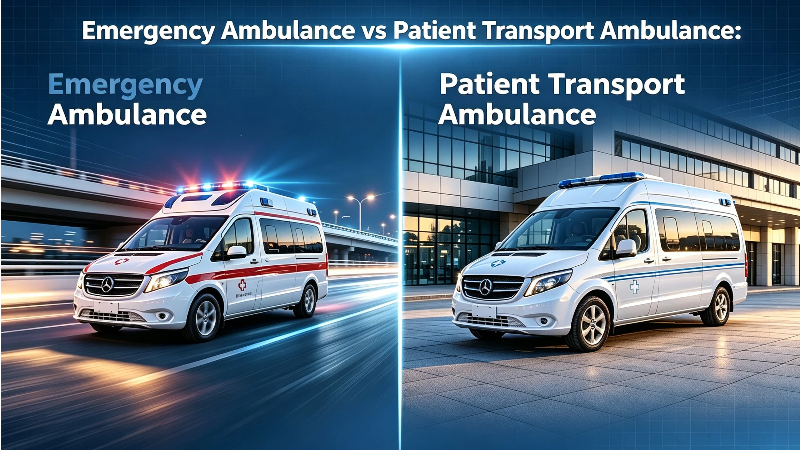
Table of Contents
What Is an Emergency Ambulance?
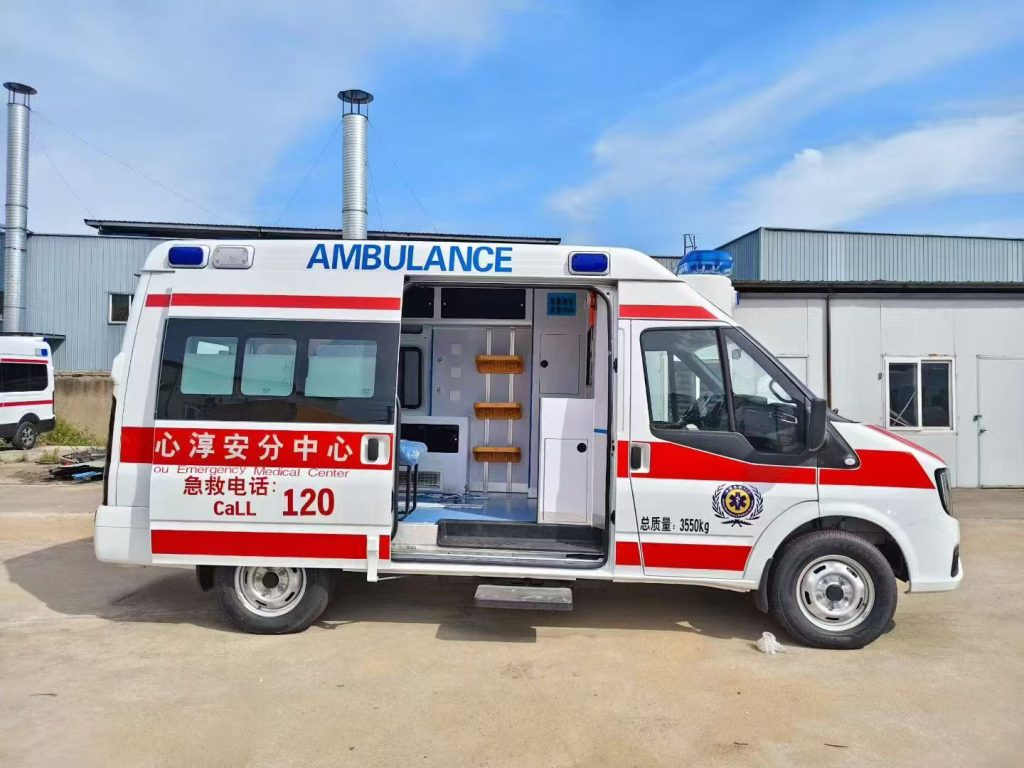
An emergency ambulance is a medical vehicle used for urgent patient care and rapid transportation.
It is commonly operated by emergency medical services (EMS), hospitals, and rescue organizations. These vehicles are equipped to support medical treatment before the patient arrives at a healthcare facility.
Compared with standard transport vehicles, emergency ambulances usually feature more advanced medical equipment, additional working space, and specialized systems for emergency response.
When Are Emergency Ambulances Used?
Emergency ambulances are mainly used when immediate medical response is required, including:
- Traffic accidents
- Severe injuries
- Heart attacks
- Stroke emergencies
- Breathing difficulties
- Critical medical conditions
During these situations, medical personnel can begin assessment and treatment inside the ambulance while transporting the patient to the hospital. For example, when an EMS team responds to a serious traffic accident, medical staff may need to perform CPR, monitor vital signs, or use a defibrillator before the patient reaches the hospital.
In this situation, an emergency ambulance works as a mobile medical unit rather than only a vehicle.
Emergency ambulances focus on rapid response, patient monitoring, and providing medical support during transportation.
Emergency Ambulance Equipment and Features
Because emergency ambulances handle critical situations, they normally carry more advanced equipment than standard patient transport vehicles.
Common equipment includes:
- Patient monitoring systems
- Oxygen supply systems
- Defibrillators
- Emergency medicine storage
- Ventilation equipment
- Emergency lighting systems
- Communication equipment
- Medical stretchers
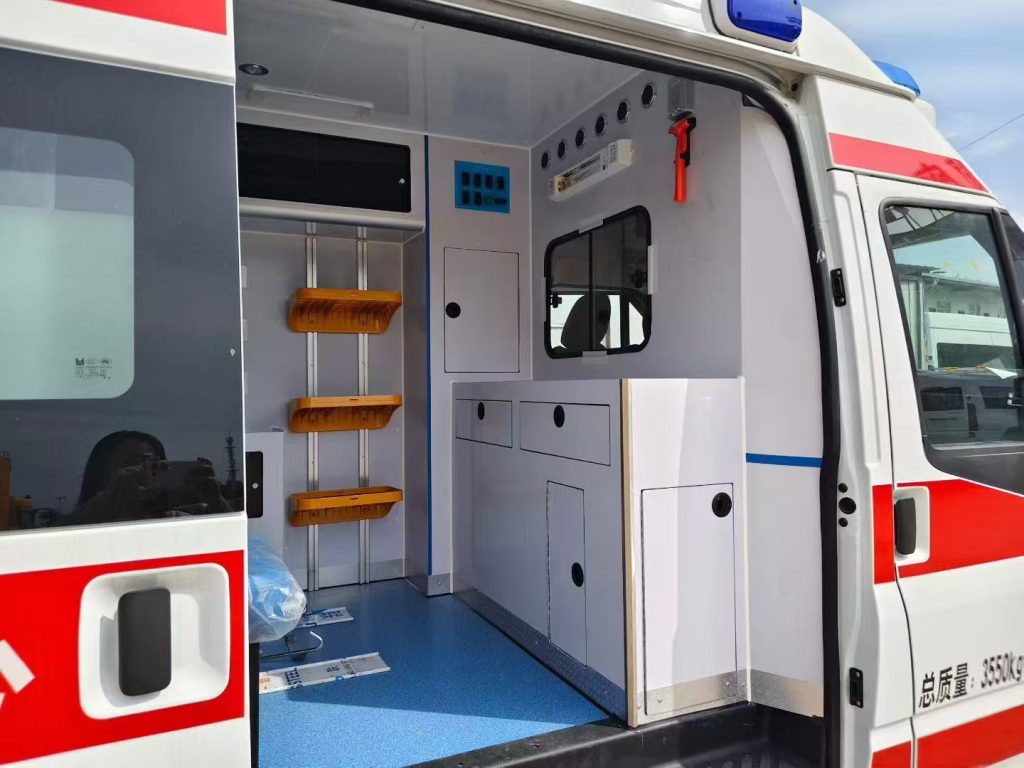
The final configuration depends on local regulations, healthcare requirements, and customer specifications.
For example, an ALS ambulance usually includes more advanced medical systems than a BLS ambulance because it supports a higher level of emergency care demand.
Ambulance configurations can range from Basic Life Support (BLS) to Advanced Life Support (ALS), depending on medical requirements, local regulations, and the level of care needed during transportation.

Emergency Ambulance Features at a Glance
Emergency ambulances usually focus on three main functions:
- Fast Response
Emergency ambulances are built for rapid deployment and quick access to patients. They are commonly used for emergency calls where every minute matters.
- Onboard Medical Care
Medical teams can perform assessment and provide treatment inside the vehicle while transporting the patient to a medical facility.
- Advanced Equipment
Emergency ambulances carry specialized equipment that supports urgent medical care and emergency operations.
What Is a Patient Transport Ambulance and Who Needs It?
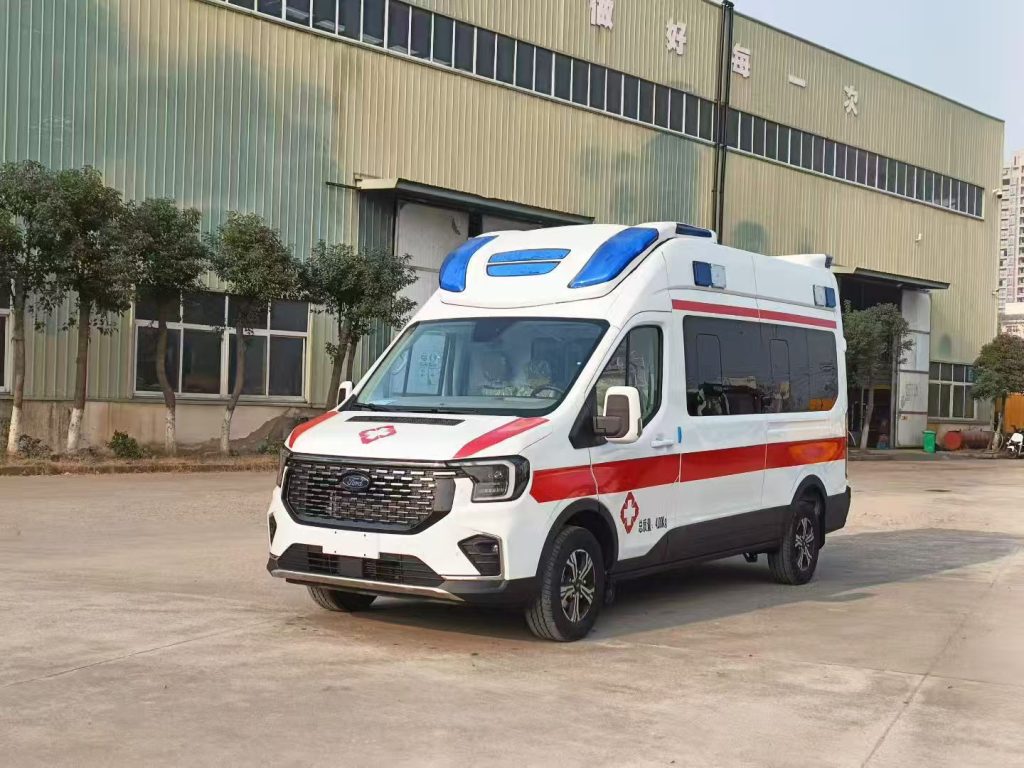
A patient transport ambulance is used to move patients who are stable and do not need emergency medical treatment during transportation.
Unlike an emergency ambulance, a patient transport ambulance is not mainly used for urgent calls. Instead, it helps patients travel safely between hospitals, clinics, nursing facilities, and their homes.
This type of ambulance is commonly used for scheduled medical transfers, regular treatments, and non-emergency patient movement.
For many healthcare providers, choosing the right patient transport ambulance can improve transportation efficiency while reducing unnecessary use of emergency resources.
Common Uses of Patient Transport Ambulances
Patient transport ambulances are often used in situations such as:
- Hospital-to-hospital transfers
- Transportation for dialysis patients
- Moving elderly or disabled patients
- Non-emergency medical appointments
- Rehabilitation center transfers
- Long-distance patient transportation
For example, a patient who needs regular dialysis treatment may need transportation several times a week between a medical facility and home or a nursing facility. In this situation, a patient transport ambulance is usually a better choice because it focuses on comfort, accessibility, and reliable transportation instead of advanced emergency equipment.
Patient Transport Ambulance Features and Equipment
Although patient transport ambulances do not carry the same level of equipment as emergency ambulances, they still provide important medical support.
Common features include:
- Patient stretcher systems
- Wheelchair access options
- Oxygen supply
- Basic monitoring equipment
- Medical storage cabinets
- Comfortable patient seating
Some models can also be customized based on different transportation needs, such as wheelchair ambulances, bariatric ambulances, or long-distance medical transport vehicles.rs in here. Because you don’t need them. Unlike an ALS ambulance, this vehicle isn’t equipped for advanced life support—and that’s perfectly fine for its job.
Emergency Ambulance vs Patient Transport Ambulance: Key Differences
Before selecting an ambulance, buyers need to understand how emergency ambulances and patient transport ambulances differ in terms of purpose, equipment, and application.
The main difference is the condition of the patients they carry and the level of medical support required during transportation
| Comparison | Emergency Ambulance | Patient Transport Ambulance |
|---|---|---|
| Core Mission | Stabilize patients before hospital arrival | Move patients safely and comfortably |
| Patient Condition | Critical, unstable, or requiring immediate medical intervention | Stable patients, non-emergency cases, or mobility-limited patients |
| Standard Equipment | Defibrillator, patient monitor, ventilator, emergency medical supplies | Wheelchair ramp/lift, comfortable seating, basic oxygen system |
| Staff Requirement | EMTs, paramedics, emergency medical teams | Driver and basic medical attendant |
| Response Mode | Emergency lights, siren, priority response | Scheduled transportation service |
Cost and Maintenance Differences
Cost is one of the main factors buyers consider when selecting an ambulance.
Emergency ambulances usually have higher purchase and maintenance costs because they include more electronic systems, advanced monitoring equipment, and emergency medical devices.
Buyers should consider long-term maintenance costs when selecting an ambulance. Emergency ambulances typically require more frequent servicing and specialized maintenance because of their advanced medical equipment and electronic systems.
Patient transport ambulances usually have simpler configurations, which can reduce maintenance requirements and make them more suitable for routine medical transportation.
How to Choose the Right Ambulance Type?
Choosing an ambulance depends on how the vehicle will be used, the patient’s condition, and the level of medical support required.
Consider Patient Conditions
The first question buyers should ask is: What type of patients will use the vehicle?
If the ambulance will be used for accident response, critical patients, or emergency calls, an emergency ambulance with advanced medical equipment is usually required.
For stable patients who need transportation support between healthcare facilities, a patient transport ambulance is often a better option.
A vehicle configured for the wrong application may lead to unnecessary costs or insufficient medical capability during operation.
Consider Medical Equipment Requirements
Different ambulance applications require different equipment levels.
Emergency ambulances usually require:
- Defibrillators
- Advanced monitoring systems
- Ventilation equipment
- Emergency medication storage
- Critical care equipment
Patient transport ambulances usually focus on:
- Patient comfort
- Basic medical support
- Stretcher transportation
- Wheelchair accessibility
- Essential first-aid equipment
The equipment configuration should match the actual working conditions of the ambulance.
Consider Daily Operation Needs
Before purchasing an ambulance, buyers should also consider:
- How often the vehicle will be used
- Average transportation distance
- Number of patients transported daily
- Local healthcare regulations
- Available medical staff
For ambulance manufacturers and buyers, selecting the correct vehicle configuration can help reduce operating costs and improve service quality.
What Should You Know Before Buying an Ambulance?
Before purchasing an ambulance, it is important to understand that different markets have different requirements.
Important factors include:
1. Vehicle Platform
The chassis affects:
- Driving performance
- Maintenance costs
- Fuel consumption
- Long-term reliability
- Load capacity
For patient transport ambulances, chassis load capacity is especially important when transporting bariatric patients or using wheelchair and stretcher loading systems.
Buyers should evaluate patient weight, medical equipment weight, and vehicle payload capacity to avoid overloading during daily operation.
2. Interior Design
A well-designed ambulance interior should provide:
- Enough working space for medical staff
- Easy access to equipment
- Safe patient movement
3. Medical Equipment Configuration
The equipment should match the intended use of the ambulance.
For example:
- Emergency response vehicles need advanced medical systems.
- Patient transport vehicles need comfort and reliable transportation features.
How to Choose the Right Ambulance for Your Organization?
Choosing the right ambulance depends on your application, patient needs, and required medical support.
Before purchasing an ambulance, consider the following factors:
- Purpose of the Ambulance
The first step is identifying how the vehicle will be used.
For emergency response, accidents, and critical patients, an emergency ambulance with advanced medical equipment is usually the best choice.
For hospital transfers, scheduled appointments, and stable patients, a patient transport ambulance provides a safer and more efficient solution.
- Equipment and Interior Configuration
Different ambulance types require different equipment. Emergency ambulances usually include:
- Patient monitoring systems
- Oxygen supply
- Defibrillators
- Emergency medical equipment
Patient transport ambulances usually focus on:
- Patient comfort
- Safe transportation
- Basic medical support
- Easy access for caregivers
The equipment configuration should match the actual operational needs to avoid unnecessary costs.
- Vehicle Platform and Customization
The ambulance chassis affects driving performance, maintenance, and long-term reliability. When choosing a vehicle platform, buyers should consider:
- Local road conditions
- Climate environment
- Maintenance availability
- Operating requirements
Professional ambulance manufacturers can also customize interior layouts, medical equipment installation, and vehicle configurations according to customer needs.
- Local Regulations and Standards
Ambulances must meet local safety and medical requirements before operation. Buyers should check:
- Vehicle certification
- Medical equipment standards
- Emergency lighting requirements
- Interior specifications
Working with an experienced supplier can help ensure the ambulance meets the required standards.
What’s Next?
Important factors include vehicle purpose, patient requirements, equipment configuration, chassis selection, and local regulations.
Understanding Emergency Ambulance vs Patient Transport Ambulance helps organizations select the right vehicle for emergency response and patient transfer needs.
Choosing the right ambulance depends on your application, patient needs, and local requirements.
Whether you need an emergency ambulance, patient transport ambulance, BLS ambulance, ALS ambulance, or a customized medical vehicle, our team can help you find the right solution.
With experience in ambulance manufacturing and vehicle customization, we provide solutions for hospitals, emergency services, and healthcare organizations worldwide.
Contact us to discuss your requirements and get professional advice for your ambulance project.
Frequently Asked Questions
What is the difference between an emergency ambulance and a patient transport ambulance?
The main difference between emergency ambulances and patient transport ambulances is the level of medical support, equipment configuration, and the type of patients they transport.
Can a patient transport ambulance be used for emergency medical transport?
Generally, patient transport ambulances are not designed for critical emergencies. They are mainly used for stable patients who need safe and scheduled transportation.
What should I consider before buying an ambulance?
Before purchasing an ambulance, buyers should evaluate: Vehicle platform, patient capacity, interior configuration, medical equipment requirements, local regulations, and future operating needs